1. Raisins and fish: where the cooking comes from
In the eighteenth century Altea lived off wine, almonds, carob, olives and figs; the grapes went into wine and raisins. More on the history
Even the new town of 1617 was meant to give the harvest of the Algar and Guadalest valleys a harbour: almonds, dried figs and above all moscatel raisins.
The grape was the Moscatel de Alejandría and the process was called l’escaldà. The bunches were dipped briefly into a copper or cast-iron cauldron set in its own furnace, the horno de escaldar, filled with lye of vine-shoot ash, lime and water. It split the skin so the fruit dried faster. The grapes then lay on cane mats raised on blocks so nothing was crushed, under cloths that kept off dew and rain. This happened every year in August and September, and it took so many hands that families and neighbours worked each other’s harvests in turn.
A building type grew out of it: the riurau, a low tile-roofed structure with a row of arches whose openings are called ojos — wide enough for a cart loaded with mats to be driven in when rain threatened. House, riurau, drying floor and moscatel vines formed one unit.
This is not distant background. It is in the municipal catalogue: ARQ 02 is a Casa con Riurau en Sogai, and the catalogue sheet for the Masia del Mandem gives its original use, word for word, as masía agraria especializada en uva pasa. See the catalogue
With phylloxera the raisin economy of the Marina was all but lost. What remained is a cuisine built on two things: what the market gardens along the Algar produced, and what the boats brought in. L’escaldà itself has been protected as intangible heritage since Decree 120/2018 of 3 August.
The níspero (loquat) is the fruit of this area. Altea lies within the protected designation of origin Nísperos Callosa d’En Sarrià, together with Callosa, Bolulla, Polop, Benidorm, La Vila Joiosa and other towns of the Marina Baixa. The specification calls the comarca “practically the only area in all of Spain” where loquats are grown. The main varieties are Algar (Algerie) and Nadal. They are picked between April and mid-June and are only available fresh for a few weeks a year. The trees flower in autumn.
Alongside the níspero, much else grows well here:
Olives: if you have trees of your own, you can take the olives to the municipal oil mill in the former Cooperativa Agrícola: above a certain delivered quantity you get the oil from your own harvest; ask about the minimum when you book. Appointments by phone on 966 97 84 57; non-registered residents pay a little more. In autumn 2023 more than 100,000 kilos went through the press.
Frutaltea: under the Frutaltea label the Cooperativa Agrícola sold mainly loquats (nísperos) and citrus fruit. Today the town council lends the farmers the cooperative’s old premises for the loquat, orange and carob harvests; in 2024 around a hundred Altea farmers sold their fruit through them.
Pomegranates: the province of Alicante has a variety with its own protected designation of origin, the Granada Mollar de Elche: red, sweet and almost seedless. Its season runs from October to February.
2. The coca a la llumà
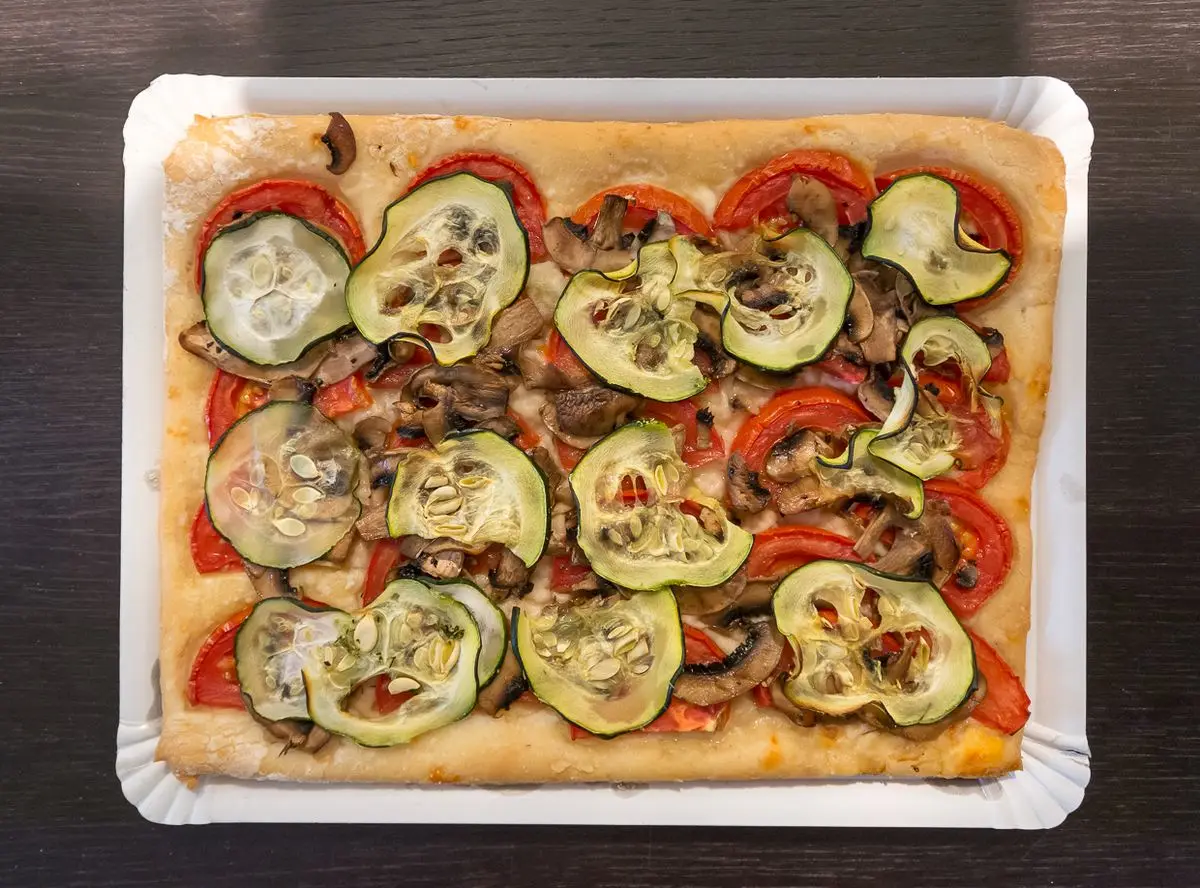
The dish that counts as Altean. A yeast-dough flatbread on a tray, with longaniza blanca and roja, black pudding with onion (morcilla de cebolla), tomato, pepper and anchovies. Nothing else. It was, so they say, food for people without money, and it is the dish the town is proudest of.
Many bakeries make it on Thursdays; some have it on other days too. And according to Altea Blog, les coques a la llumà names not only the bread but the occasion: outdoors, in the fields, at a wood-fired oven, with as many people as fit round the table.
Where the name comes from, none of the sources we could check explains. The link to llum, the flame of the oven, is the obvious reading — but it is not documented here.
3. Rice dishes, and why paella is called paella
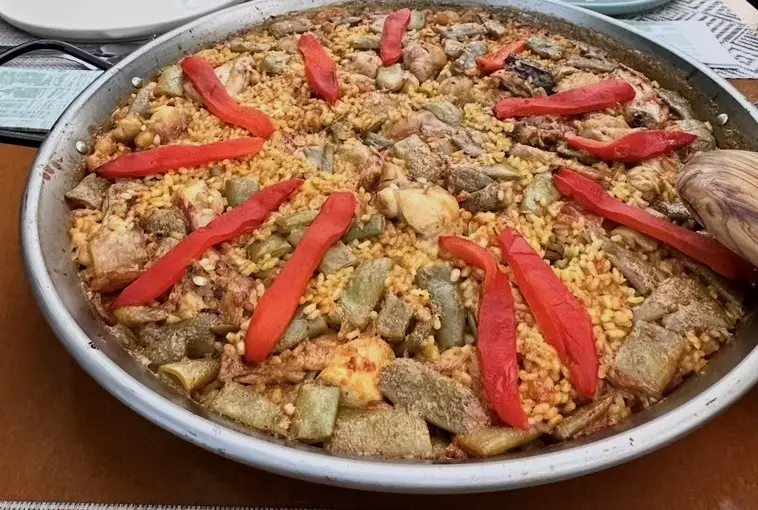
Paella is named after the pan, not the rice: paella is the Valencian word for that shallow two-handled dish. What goes into it changes from place to place.
On this coast the main ones are:
- Caldero — fish rice, said to have been cooked aboard the boats in an iron pot.
- Arròs a banda — the same idea, but fish and rice are served separately. A banda means “to one side”.
- Fideuà — the same again with short noodles instead of rice.
- Arròs amb fesols i naps — the rice of the market gardens: beans and turnips, popular in winter.
- Caldereta — creamy rice with fish, also popular in winter.
- Arròs al forn — baked in the oven with meat and sausage.
In our experience, rice here is a midday meal. Order it in the evening and you will get it — but it was probably cooked that morning.
4. What comes out of the bay
- Pescadito de la bahía — the small fish of the bay, fried. One of the commonest tapas and the first thing to try.
- Clóchinas — small mussels, in season only.
- Pulpo — octopus, grilled or boiled.
- Cruet de peix — fish stew.
- Pebrereta, and pebrereta amb sangatxo — a pepper dish, the second with the dark tuna meat from along the backbone.
- Erizos — sea urchin roe.
- Fish from the lonja — sardine, sea bass (lubina), gilthead bream (dorada), red mullet (salmonete), monkfish and mackerel: the species the marine guide of neighbouring Calp lists for the bay. In Altea itself, three boats were still fishing with the traditional trammel net in 2019.
- Salazones — salted and dried fish: mojama of tuna, with melva and bonito, often served with the roe. This is a very old preserving method.
5. Drinking
Fondillón is the province of Alicante’s showpiece, and it is odd enough to belong here. It is made from Monastrell grapes left to overripen on the vine, with no added alcohol, sugar or yeast, and then spends at least ten years in cask. The regulating council of the DOP Alicante calls it the only aged wine of its kind in the world; nine wineries make it, and not here but inland in the Vinalopó.
Moscatel and mistela. The same grape that was once dried into raisins also makes sweet wine. Anyone who wants to understand what this landscape once lived on should drink that.
Althaia, beer from Altea. Jorge Sánchez brewed at home before founding the brewery around 2014 with oenologist Mayte Pardo. Since 2021 it has brewed in larger premises in the municipality; in the tap room the beer comes straight from the fermenter, and there are guided tours with tastings. The name, incidentally, is one of the etymologies of the town’s own: the Greek one. Partida el Planet 196 · 965 84 06 05 · On the map · cervezasalthaia.com ↗
What is not from here: agua de Valencia comes from the city of Valencia, not this coast, and horchata from Alboraia near Valencia. You will find both everywhere and both are good — they are simply not Altean.
6. Sources and limits
What this page is not. A restaurant guide. We name no establishments; review sites exist for that, and we would have no basis for putting one ahead of another.
And one limitation, for honesty’s sake: of everything above, only the coca a la llumà counts as specifically Altean. The rice dishes, the salted fish and the fondillón belong to the Marina Baixa or to the province. Anyone who claims Altea has a cuisine of its own is overstating it; that it has a dish of its own is generally accepted.
Raisins, l’escaldà and the riurau: entry in the Inventory of Spain’s Intangible Cultural Heritage ↗, protected by Decree 120/2018 of 3 August of the Consell. The detail on the Masia del Mandem comes from catalogue sheet ARQ 04 of the municipal protection catalogue.
The new town of 1617, figs and almonds as exports: Juan V. Martín Devesa, “Lo que el mar nos enseñó”, Revista Club Náutico Altea no. 25, April 2024 ↗.
Farming in the eighteenth century: University of Alicante history blog, Agricultura durante el siglo XVIII ↗. Phylloxera and the raisin economy: Alicante Plaza, 28 August 2017 ↗.
Níspero: PDO specification (MAPA) ↗; Turisme Comunitat Valenciana ↗.
Frutaltea, citrus and loquats: El Periòdic, 12 December 2012 ↗; harvests at the old cooperative: Alicante Plaza, 1 April 2025 ↗.
Granada Mollar de Elche: Turisme Comunitat Valenciana ↗.
Oil mill: Alicante Plaza, 16 October 2024 ↗.
Fish of the bay: Guía marinera, Calp town council ↗; fishing in Altea: El Periòdic, 15 November 2019 ↗.
Coca a la llumà and the local dishes: as described by Altea Blog ↗, a private site from the town.
Althaia: founding, the 2021 move and the awards according to three reports in Alicante Plaza ↗ (7 August 2019), 31 August 2021 ↗ and 28 March 2019 ↗. Address and telephone from the map entry. That Althaia is the only brewery in Altea appears in none of the sources, so it is not claimed here.
Fondillón: figures from the regulating council of the DOP Alicante ↗.
Clóchinas: season from May to August according to valenciaplaza.com (22 April 2013). Greek reading of the place name: according to the University of Alicante’s history blog (blogs.ua.es), which considers the Arabic derivation more likely.
Compiled October 2026. Recipes are handed down and change from household to household; what is given here is the common version, not the only right one.